


HDMI Information
HDMI (High Definition Multimedia Interface) was developed by the HDMI Working Group and first released in December 2002. Built on the HDCP-enabled DVI model, HDMI carries both uncompressed digital video and multi-channel digital audio over a single cable, replacing up to 10 separate audio and video cables with one compact connector.
Key features include Consumer Electronics Control (CEC) for universal remote support, bi-directional device communication, and lossless transmission of high definition video without color depth loss or brightness changes. HDMI cables can run up to 15 meters (compared to DVI's 5 meter limit).
Audio Support
From the start, HDMI was built to carry up to 8 channels of uncompressed audio at sample rates of 48, 96, or even 192 kHz, as well as compressed multi-channel formats such as Dolby Digital and DTS, following the DVD-Audio standard. Later versions added bitstream support for Dolby TrueHD and DTS-HD Master Audio, and HDMI 2.1's eARC carries object-based formats like Dolby Atmos and DTS:X. Note that HDMI is backward-compatible with DVI for video, but a DVI device cannot receive HDMI audio — DVI carries no audio.
HDMI Connector Types
- Type A — Standard 19-pin connector used in TVs, monitors, and consumer electronics
- Type B — 29-pin dual-link connector for high-resolution PC applications
- Type C (Mini HDMI) — Compact connector for portable devices and tablets (introduced 2006)
- Type D (Micro HDMI) — Ultra-compact connector for smartphones and small devices (introduced June 2009)
- Type E — Automotive connection system with locking mechanism
Version History
HDMI 1.3 (June 2006)
Increased clock rates from 165 MHz to 340 MHz (single link) and 680 MHz (dual link), raising maximum bandwidth to 10.2 Gbps. This enabled support for resolutions beyond 1080p and deep color (up to 48-bit). HDMI 1.3 is fully backwards compatible with all earlier versions.
HDMI 1.4 / 1.4a (March 2010)
Introduced several major features:
- HDMI Ethernet Channel (HEC) — Allows IP-enabled devices to share an internet connection without separate ethernet cabling
- Audio Return Channel (ARC) — Enables a TV to send audio upstream to a receiver, eliminating a separate audio cable
- 3D Support — Standardized 3D format for gaming and home theater
- 4K Support — Initial support for 3840x2160 (4K Ultra HD) at 30 Hz
HDMI 2.0 (September 2013)
Increased bandwidth to 18 Gbps, enabling 4K at 60 Hz, up to 32 audio channels, and dual video streams for multi-view applications.
HDMI 2.0a / 2.0b (2015–2016)
Added HDR (High Dynamic Range) video support and Hybrid Log-Gamma (HLG) for HDR broadcast content.
HDMI 2.1 (November 2017)
A major leap in capability with bandwidth increased to 48 Gbps:
- 8K at 60 Hz and 4K at 120 Hz support
- Dynamic HDR — Per-scene or per-frame HDR metadata
- eARC (Enhanced Audio Return Channel) — Supports Dolby Atmos and DTS:X object-based audio
- VRR (Variable Refresh Rate) — Reduces lag and stutter for gaming
- ALLM (Auto Low Latency Mode) — Automatic game mode switching
- QFT (Quick Frame Transport) — Reduces latency for interactive applications
HDMI 2.1a / 2.1b (2022–2023)
Added Source-Based Tone Mapping (SBTM) allowing the source device to optimize HDR content for the connected display, improving HDR performance across a wider range of devices.
| Side A | Cable / Adapter | Side B |
|---|---|---|
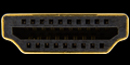 |
HDMI to HDMI | |
|
HDMI to DVI-D | 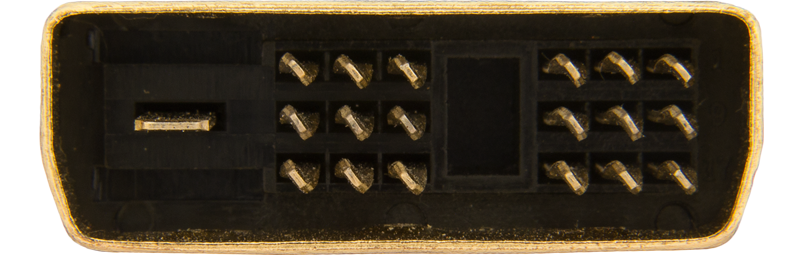 |
|
HDMI to DisplayPort |  |
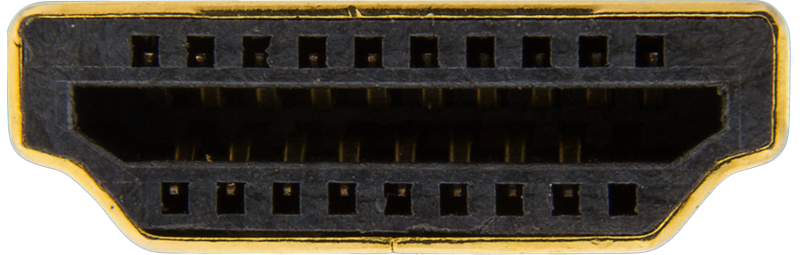 |
HDMI to HDMI Mini C | 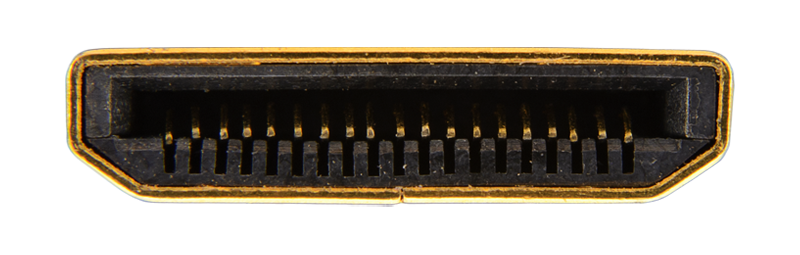 |
|
HDMI to HDMI Micro D |  |
|
HDMI Mini C to HDMI Mini C | |
| Side A | Cable / Adapter | Side B |
|---|---|---|
|
HDMI Male to DVI-D Female | 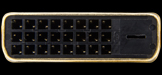 |
 |
HDMI Female to DVI-D Female | |
|
HDMI Female to DVI-D Male | 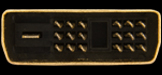 |
|
HDMI Female to DisplayPort | |
Last updated: